Monday, June 1, 2015
Thursday, May 28, 2015
5 Steps To Qualify For A Mortgage If You're Self-Employed
If you are among the thousands of Americans who turned the dark cloud of the recession into the silver lining of becoming self-employed, you may feel you are now in a position to refinance your mortgage or to buy a home. Even with good credit and sufficient assets, though, you'll find that even the best mortgage lenders will require you to produce your tax returns and possibly a quarterly profit-and-loss statement in order to establish that you have sufficient income to make your mortgage payments.Most mortgage applicants today are prepared to go through a few hoops to qualify for a mortgage, but if you're self-employed you may need more than a quick comparison of the best mortgage rates to find the best mortgage for you. If you're new to self-employment, you will need to wait until you have two years of tax returns filed before you can be approved for a new mortgage in order to include your self-employment income in your loan application.
Good Credit
All borrowers today need good credit, with a score of 620, 640 or above for a Federal Housing Administration (FHA) loan and a score of 740 or higher to be offered the best mortgage rates for a conventional loan. Some lenders consider self-employment income as a higher risk than regular paychecks, so a higher credit score can offset your potential risk factors and give a lender greater confidence when qualifying you for a loan. Check your credit report to see if you have negative information that can be corrected or improved before you apply.
Learn which homeowners insurance carrier offers the best coverage and lowest rates 
Lenders typically like to see an overall debt-to-income ratio of 41% or less, although borrowers with other compensating factors may still qualify for a mortgage with a ratio as high as 45%. You can use a mortgage calculator to estimate your housing costs along with your other debt. If you can pay off some bills to reduce your debt-to-income ratio that can be another compensating factor in your favor.
Income
Many self-employed individuals reduce their income for tax purposes by deducting business expenses. Be aware that your income for a mortgage loan will be the income stated on your tax returns. So if your income is too low, you may qualify for a smaller mortgage amount than you thought. Your income will usually be the average of your two most recent tax returns, even if you made more money this year than last year, it may not matter to your lender. Lenders often require a quarterly profit-and-loss statement in addition to your most recent tax returns. New rules from the FHA say that self-employed borrowers are required to prove their ongoing income in the form of a year-to-date profit and loss statement if more than one quarter has passed since the last tax return was filed.
Assets
If you are refinancing, your mortgage will be based on the amount of your home equity. If you, like many other homeowners, experienced declining home values in your area, you may want to consider a "cash-in" refinance. A cash-in refinance builds your home equity faster and, if you are underwater on your home loan, can bring you back above water. If you're buying a home, a bigger down payment can make it easier to qualify for a mortgage since the loan amount will be smaller.
Reserves
The rules about how much you need to have in cash reserves varies from one lender to another and for different mortgage products, but you should have at least two months or more of housing payments (principal, interest, taxes and insurance) in the bank to protect yourself in an emergency. Lenders particularly need to know that self-employed borrowers, whose income often fluctuates more than regular employees, can handle their finances and have savings.
The Bottom Line
If you are self-employed and have solid income, assets and good credit, you are likely to be able to qualify for a mortgage as long as you provide the documentation needed to your lender.
Thursday, May 21, 2015
6 Things You Think Add Value To Your Home - But Really Don't
Every homeowner must pay for routine home maintenance, such as replacing worn-out plumbing components or staining the deck, but some choose to make improvements with the intention of increasing the home's value. Certain projects, such as adding a well thought-out family room - or other functional space - can be a wise investment, as they do add to the value of the home. Other projects, however, allow little opportunity to recover the costs when it's time to sell. Even though the current homeowner may greatly appreciate the improvement, a buyer could be unimpressed and unwilling to factor the upgrade into the purchase price. Homeowners, therefore, need to be careful with how they choose to spend their money if they are expecting the investment to pay off. Here are six things you think add value to your home, but really don't.
1. Swimming Pools
Swimming pools are one of those things that may be nice to enjoy at your friend's or neighbor's house, but that can be a hassle to have at your own home. Many potential homebuyers view swimming pools as dangerous, expensive to maintain and a lawsuit waiting to happen. Families with young children in particular may turn down an otherwise perfect house because of the pool (and the fear of a child going in the pool unsupervised). In fact, a would-be buyer's offer may be contingent on the home seller dismantling an aboveground pool or filling in an in-ground pool.
An in-ground pool costs anywhere from $10,000 to more than $100,000, and additional yearly maintenance expenses need to be considered. That's a significant amount of money that might never be recouped if and when the house is sold.
2. Overbuilding for the Neighborhood
Homeowners may, in an attempt to increase the value of a home, make improvements to the property that unintentionally make the home fall outside of the norm for the neighborhood. While a large, expensive remodel, such as adding a second story with two bedrooms and a full bath, might make the home more appealing, it will not add significantly to the resale value if the house is in the midst of a neighborhood of small, one-story homes.
In general, homebuyers do not want to pay $250,000 for a house that sits in a neighborhood with an average sales price of $150,000; the house will seem overpriced even if it is more desirable than the surrounding properties. The buyer will instead look to spend the $250,000 in a $250,000 neighborhood. The house might be beautiful, but any money spent on overbuilding might be difficult to recover unless the other homes in the neighborhood follow suit.
3. Extensive Landscaping
Homebuyers may appreciate well-maintained or mature landscaping, but don't expect the home's value to increase because of it. A beautiful yard may encourage potential buyers to take a closer look at the property, but will probably not add to the selling price. If a buyer is unable or unwilling to put in the effort to maintain a garden, it will quickly become an eyesore, or the new homeowner might need to pay a qualified gardener to take charge. Either way, many buyers view elaborate landscaping as a burden (even though it might be attractive) and, as a result, are not likely to consider it when placing value on the home.
4. High-End Upgrades
Putting stainless steel appliances in your kitchen or imported tiles in your entryway may do little to increase the value of your home if the bathrooms are still vinyl-floored and the shag carpeting in the bedrooms is leftover from the '60s. Upgrades should be consistent to maintain a similar style and quality throughout the home. A home that has a beautifully remodeled and modern kitchen can be viewed as a work in project if the bathrooms remain functionally obsolete. The remodel, therefore, might not fetch as high a return as if the rest of the home were brought up to the same level. High-quality upgrades generally increase the value of high-end homes, but not necessarily mid-range houses where the upgrade may be inconsistent with the rest of the home.
In addition, specific high-end features such as media rooms with specialized audio, visual or gaming equipment may be appealing to a few prospective buyers, but many potential homebuyers would not consider paying more for the home simply because of this additional feature. Chances are that the room would be re-tasked to a more generic living space.
5. Wall-to-Wall Carpeting
While real estate listings may still boast "new carpeting throughout" as a selling point, potential homebuyers today may cringe at the idea of having wall-to-wall carpeting. Carpeting is expensive to purchase and install. In addition, there is growing concern over the healthfulness of carpeting due to the amount of chemicals used in its processing and the potential for allergens (a serious concern for families with children). Add to that the probability that the carpet style and color that you thought was absolutely perfect might not be what someone else had in mind.
Because of these hurdles, wall-to-wall carpet is something on which it's difficult to recoup the costs. Removing carpeting and restoring wood floors is usually a more profitable investment.
6. Invisible Improvements
Invisible improvements are those costly projects that you know make your house a better place to live in, but that nobody else would notice - or likely care about. A new plumbing system or HVAC unit (heating, venting and air conditioning) might be necessary, but don't expect it to recover these costs when it comes time to sell. Many homebuyers simply expect these systems to be in good working order and will not pay extra just because you recently installed a new heater. It may be better to think of these improvements in terms of regular maintenance, and not an investment in your home's value.
The Bottom Line
It is difficult to imagine spending thousands of dollars on a home-improvement project that will not be reflected in the home's value when it comes time to sell. There is no simple equation for determining which projects will garner the highest return, or the most bang for your buck. Some of this depends on the local market and even the age and style of the house. Homeowners frequently must choose between an improvement that they would really love to have (the in-ground swimming pool) and one that would prove to be a better investment. A bit of research, or the advice of a qualified real estate professional, can help homeowners avoid costly projects that don't really add value to a home.
1. Swimming Pools
Swimming pools are one of those things that may be nice to enjoy at your friend's or neighbor's house, but that can be a hassle to have at your own home. Many potential homebuyers view swimming pools as dangerous, expensive to maintain and a lawsuit waiting to happen. Families with young children in particular may turn down an otherwise perfect house because of the pool (and the fear of a child going in the pool unsupervised). In fact, a would-be buyer's offer may be contingent on the home seller dismantling an aboveground pool or filling in an in-ground pool.
An in-ground pool costs anywhere from $10,000 to more than $100,000, and additional yearly maintenance expenses need to be considered. That's a significant amount of money that might never be recouped if and when the house is sold.
2. Overbuilding for the Neighborhood
Homeowners may, in an attempt to increase the value of a home, make improvements to the property that unintentionally make the home fall outside of the norm for the neighborhood. While a large, expensive remodel, such as adding a second story with two bedrooms and a full bath, might make the home more appealing, it will not add significantly to the resale value if the house is in the midst of a neighborhood of small, one-story homes.
In general, homebuyers do not want to pay $250,000 for a house that sits in a neighborhood with an average sales price of $150,000; the house will seem overpriced even if it is more desirable than the surrounding properties. The buyer will instead look to spend the $250,000 in a $250,000 neighborhood. The house might be beautiful, but any money spent on overbuilding might be difficult to recover unless the other homes in the neighborhood follow suit.
3. Extensive Landscaping
Homebuyers may appreciate well-maintained or mature landscaping, but don't expect the home's value to increase because of it. A beautiful yard may encourage potential buyers to take a closer look at the property, but will probably not add to the selling price. If a buyer is unable or unwilling to put in the effort to maintain a garden, it will quickly become an eyesore, or the new homeowner might need to pay a qualified gardener to take charge. Either way, many buyers view elaborate landscaping as a burden (even though it might be attractive) and, as a result, are not likely to consider it when placing value on the home.
4. High-End Upgrades
Putting stainless steel appliances in your kitchen or imported tiles in your entryway may do little to increase the value of your home if the bathrooms are still vinyl-floored and the shag carpeting in the bedrooms is leftover from the '60s. Upgrades should be consistent to maintain a similar style and quality throughout the home. A home that has a beautifully remodeled and modern kitchen can be viewed as a work in project if the bathrooms remain functionally obsolete. The remodel, therefore, might not fetch as high a return as if the rest of the home were brought up to the same level. High-quality upgrades generally increase the value of high-end homes, but not necessarily mid-range houses where the upgrade may be inconsistent with the rest of the home.
In addition, specific high-end features such as media rooms with specialized audio, visual or gaming equipment may be appealing to a few prospective buyers, but many potential homebuyers would not consider paying more for the home simply because of this additional feature. Chances are that the room would be re-tasked to a more generic living space.
5. Wall-to-Wall Carpeting
While real estate listings may still boast "new carpeting throughout" as a selling point, potential homebuyers today may cringe at the idea of having wall-to-wall carpeting. Carpeting is expensive to purchase and install. In addition, there is growing concern over the healthfulness of carpeting due to the amount of chemicals used in its processing and the potential for allergens (a serious concern for families with children). Add to that the probability that the carpet style and color that you thought was absolutely perfect might not be what someone else had in mind.
Because of these hurdles, wall-to-wall carpet is something on which it's difficult to recoup the costs. Removing carpeting and restoring wood floors is usually a more profitable investment.
6. Invisible Improvements
Invisible improvements are those costly projects that you know make your house a better place to live in, but that nobody else would notice - or likely care about. A new plumbing system or HVAC unit (heating, venting and air conditioning) might be necessary, but don't expect it to recover these costs when it comes time to sell. Many homebuyers simply expect these systems to be in good working order and will not pay extra just because you recently installed a new heater. It may be better to think of these improvements in terms of regular maintenance, and not an investment in your home's value.
The Bottom Line
It is difficult to imagine spending thousands of dollars on a home-improvement project that will not be reflected in the home's value when it comes time to sell. There is no simple equation for determining which projects will garner the highest return, or the most bang for your buck. Some of this depends on the local market and even the age and style of the house. Homeowners frequently must choose between an improvement that they would really love to have (the in-ground swimming pool) and one that would prove to be a better investment. A bit of research, or the advice of a qualified real estate professional, can help homeowners avoid costly projects that don't really add value to a home.
Wednesday, May 13, 2015
Interior Design Tips
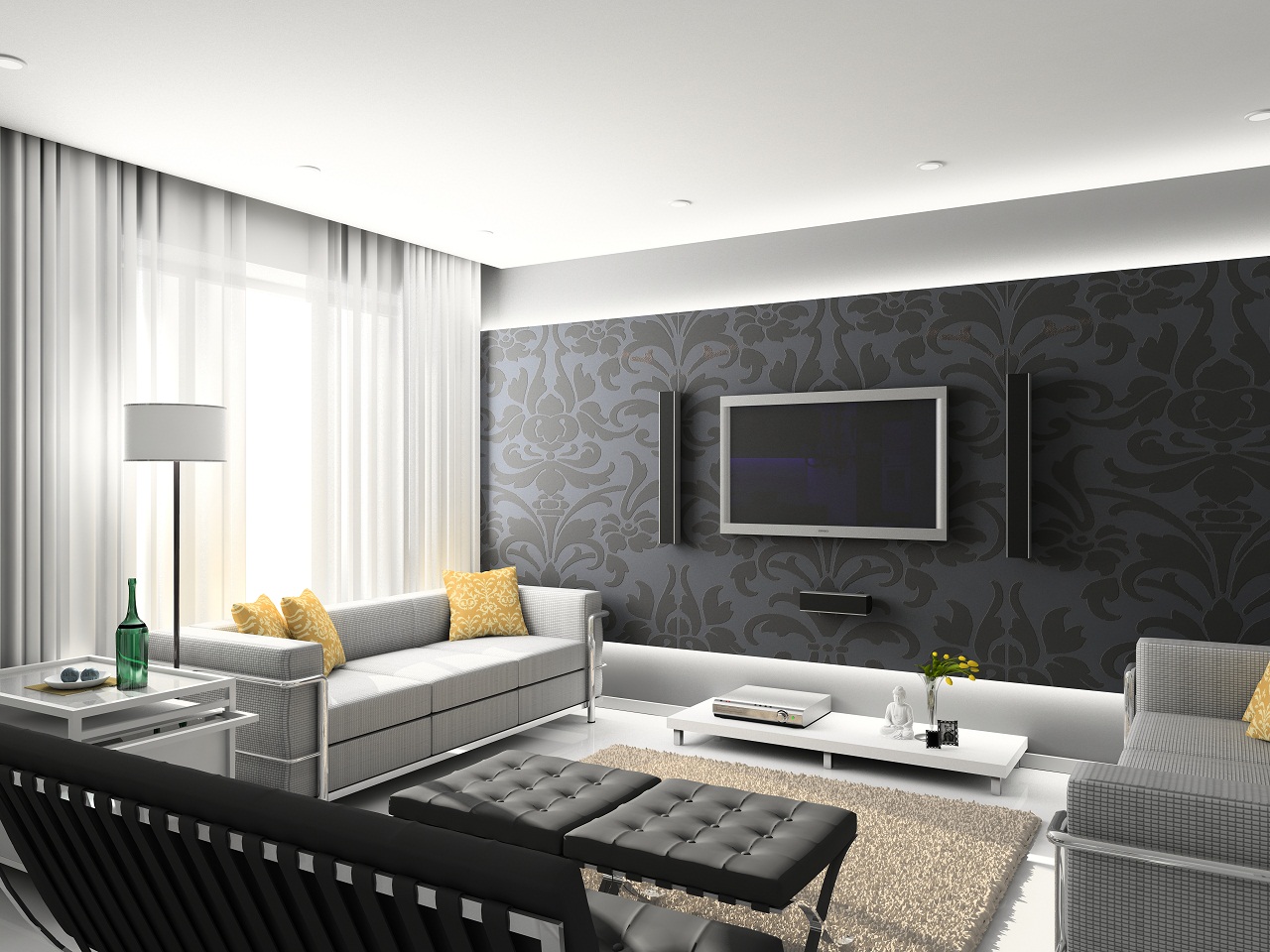
Interior decoration has never been more popular. Everyone wants the sort of home seen in glossy magazines; yet the real trick of decorating lies in making sure you have the right wallpaper, fabric and all the extra ingredients including lamps, pictures, lighting and flowers. Here I would like to take you through some of my key elements when it comes to decorating.
Where to Begin

Where to Begin
Look at the basic shell of a room and consider all its potential. You have to train the eye, so that no matter how unpromising the existing decor is, you can look around and imagine everything stripped away, with only the skeleton remaining.
Focal Points
Each room needs a centerpiece of some description. This focal point is important because it sets the tone for the rest of the decorating scheme and ties the total look together. It is also useful because it will draw the eye away from less pleasing aspects of the room.
Finishing Touches
Not all rooms require a complete overhaul. Many of them can be given a simple lift by editing some things out, re-positioning others and introducing a few new buys. It is amazing how different a room can look with a new rug, a different set of cushion covers or a change of lampshades. Accessories and flowers also help newly decorated rooms become truly finished.
Lighting
Never underestimate the importance of light – both natural and artificial – in a room. Light is one of those life-enhancing ingredients that are always worth spending time and money on to get just right.(Image of Arthur Lamp Table and Hastings chair upholstered in the Montacute Fabric)

Using Pattern & Color
When using color don’t fall into the trap of worrying over what goes with what. In truth you can mix any color with any other; what really matters is the intensity of the colors you choose. Color fashions come and go which is why I have evolved collections over the years that are guaranteed to complement each other.
Thursday, May 7, 2015
Common Types of Mold in Homes
Mold comes in all shapes, sizes and colors. Learn how to identify the type of mold in your home and develop a plan of attack for treating it.
Like the colors in a box of crayons (but not nearly as fun), mold comes in a variety of hues, including black, white, green and orange.
Water Intrusion
The most common types of mold include aspergillus, cladosporium and stachybotrys atra (also known as black mold).
Aspergillus is a fairly allergenic mold that is commonly found on foods and in home air conditioning systems. Cladosporium is typically a black or green "pepper like" substance that grows on the back of toilets, painted surfaces and fiberglass air ducts. While this mold is nontoxic to humans, it can trigger common allergy symptoms, such as red and watery eyes, rashes and a sore throat.
Mold that appears to be orange or red in color is typically found outdoors, given its nature to thrive on decaying plants or moist wood. This type of mold, which can appear slimy, is harmless and should only be removed for aesthetic purposes.
White mold is not technically a type of mold, but the good news is that this typically indicates the mold is only in the early stages of growth and can easily be treated.
Be on the lookout for signs of a water leak or condensation: water stains that get bigger over time, musty odors, continually damp carpet, or beads of water or puddles on hard surfaces. When you do have water damage, thoroughly clean and dry carpets and building materials within 24 hours if possible, and consider replacing waterlogged items to eliminate the risk of mold.
If you suspect a problem (or better yet, as preventive maintenance), hire professionals to inspect for damaged shingles and siding, poorly connected plumbing and leaky pipes, and other moisture problems, such as inadequate vapor barriers. Mitigate the issues as soon as possible.
Biological Contaminants
The EPA considers bacteria, molds, mildew, viruses, animal dander, cat saliva, house dust, mites, cockroaches and pollen all biological contaminants. Excessive moisture creates breeding grounds for these contaminants, so ventilate adequately and keep relative humidity between 30 percent and 50 percent to prevent condensation on building materials.
Regular household cleaning and maintenance go a long way toward limiting exposure. Change filters and have heating and cooling equipment cleaned and checked regularly by a professional; these systems can become not only breeding grounds for mold and other biological contaminants but also superhighways for dispersing them throughout the home.
If these methods don't suffice, an indoor air-cleaning device may help an affected area. However, avoid ozone generators that are sold as air cleaners. The EPA warns: "Whether in its pure form or mixed with other chemicals, ozone can be harmful to health."
Basements can be a particular trouble zone. The EPA recommends you clean and disinfect basement drains regularly and that you not finish a basement unless all moisture issues are abated.
Regular household cleaning and maintenance go a long way toward limiting exposure. Change filters and have heating and cooling equipment cleaned and checked regularly by a professional; these systems can become not only breeding grounds for mold and other biological contaminants but also superhighways for dispersing them throughout the home.
If these methods don't suffice, an indoor air-cleaning device may help an affected area. However, avoid ozone generators that are sold as air cleaners. The EPA warns: "Whether in its pure form or mixed with other chemicals, ozone can be harmful to health."
Basements can be a particular trouble zone. The EPA recommends you clean and disinfect basement drains regularly and that you not finish a basement unless all moisture issues are abated.
Sunday, April 26, 2015
How Staging Can Eliminate Buyer Confusion
When I first met with a recent client, Stuart, he shared memories of raising his family, gatherings with friends, and 23 years in his beautiful 3,200-square-foot contemporary home.
The home offered tremendous open space and wonderful features, but for the past several years, key rooms in the home were converted to Stu’s home office suite. The living and dining room housed desks, chairs, and video editing equipment — an uninviting space for a young family seeking a place to call home and make their own memories.
Real estate professional Ellen Levada of Calcagni in Cheshire, Conn., recommended our staging services to make the home attractive to buyers, get it sold, and for top dollar. With a new home already purchased, Stu was motivated and understood the importance of staging to sell. After our initial meeting, he embraced our proposal to stage 14 rooms and showcase the open floor plan, square footage, and wonderful architectural details of the home.

The open living room offers great windows, high ceilings, and hardwood floors but as an office suite was not going to engage buyers. To show buyers the space potential, stagers removed all of the office furniture and replaced it with appropriate furnishings including a couch, love seat, and tables. We also painted the walls a more modern, neutral color, and accessorized.
Professional listing photos captured the beauty of the home and in just a short 14 days on the market, guess what? The home sold and is now under contract!
Thursday, April 16, 2015
Tips on how to buy, sell, or rent a house or apartment.
Here are some insider tips and non-boring advice on how to buy, sell, or rent a house or apartment.
Tax/Financial Benefits: Home buyers can take potentially advantage of a whole slew of tax benefits, such as:
- Mortgage Interest Deductions
As long as your mortgage balance is smaller than the price of your home, mortgage interest is fully deductible on your tax return. Interest is the largest component of your mortgage payment. In some cases, you may also deduct homeowners association fees and property taxes.
- Property Tax Deductions
Real estate property taxes paid for a first home and a vacation home are fully deductible for income tax purposes. In California, Prop 13 limits property tax increases to 2 percent per year or the rate of inflation, whichever is less.
- Capital Gain Exclusion
If you've lived in your house for two of the past five years, you can exclude up to $250,000 for an individual or up to $500,000 for a married couple of profit from capital gains.
- Preferential Tax Treatment
If you receive more profit from the sale of your home than the allowable exclusion, that profit will be considered a capital asset as long as you owned your home for more than one year.
- Building Equity
Over time, you may be able to use the equity you build to fund home improvements, or pay off other, higher interest debts, such as credit card debts or student loans.
Subscribe to:
Posts (Atom)